Coil Defender
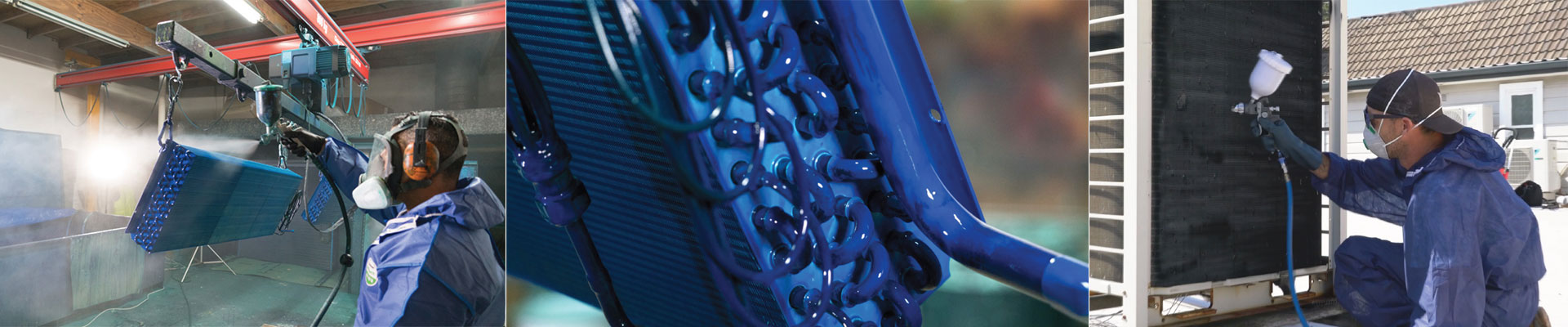
ECRA-DTM High Gloss ACRYLIC is a direct to metal high gloss water based copolymer specifically designed for use in industrial and marine HVAC coils, micro-channel coils and refrigeration coils to stop corrosion from salt and industrial pollution. The coating exhibits excellent performance properties with minimal thermal resistance and pressure drop.
PRODUCT DESCRIPTION
The formulation is a new HYBRID Resin which allows the addition of special properties which increase both the corrosion resistance and the overall performance of the heat exchange surface. The resin matrix is a tightly crosslinked coating which bonds to all metal substrates.
The formulation, in addition, provides super hydrophobic and anti-microbial (silver ion) film characteristics suitable for both the top coat and maintenance applications.
The coating can be applied to previously coated fins to increase protection. Coatings such as Heresite, BLYGOLD and E-COAT can be coated without pretreatment.
SPECIFICATIONS
Water based acrylic resin applied by air less spray gun or high pressure spray gun. The coating is UV resistant, has a DFT of no more than 20 microns, flexible and highly resistant to aggressive environments. The adhesion level meets Cross Hatch Test Level 0 (European) and 5B (USA) according to ASTM 3359-88 53151 method B-A. Corrosion resistance was confirmed by testing of no less than 10 000 hrs salt spray resistance per ASTM B117 using aluminium test panels.
APPLICATIONS FOR TXR-RESTORE
New and already installed air cooled condenser coils.
APPLICATION METHOD
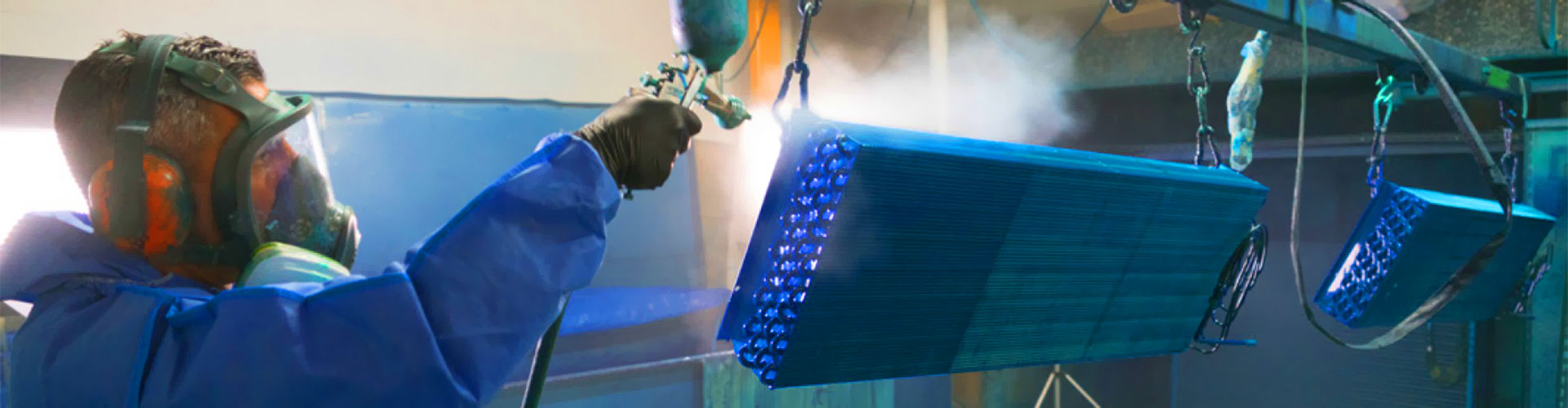
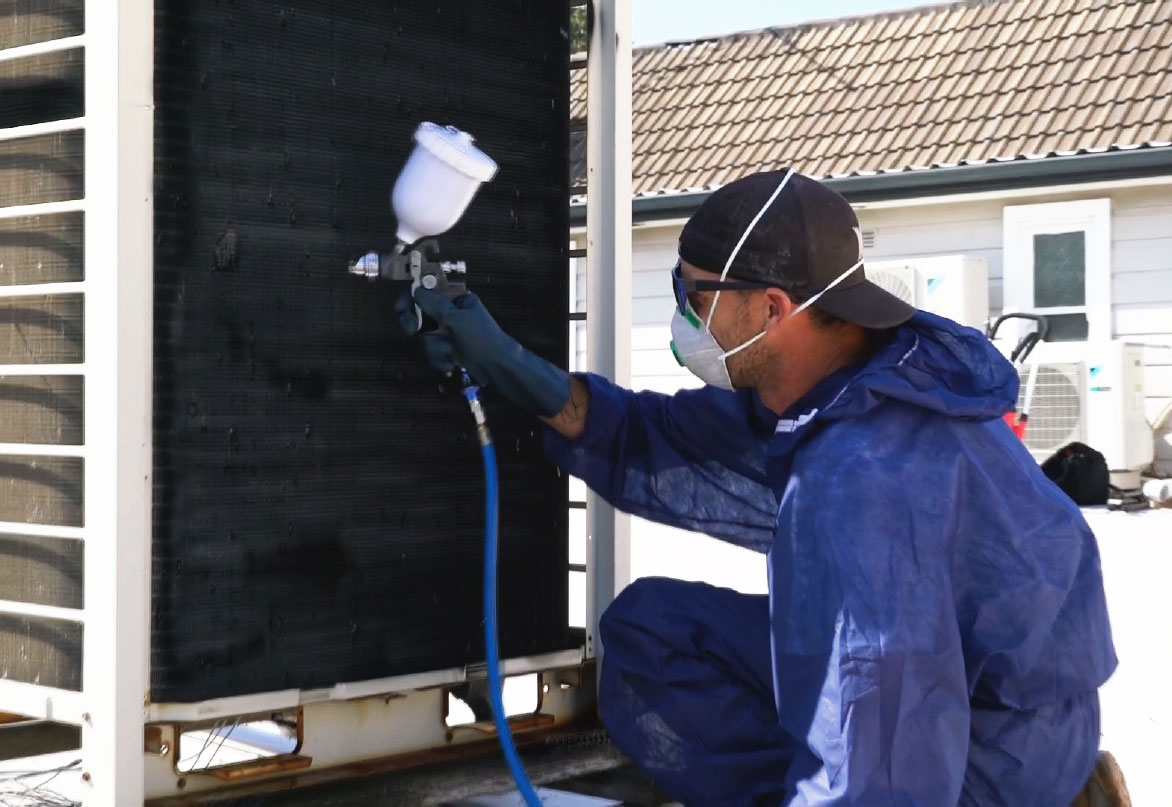
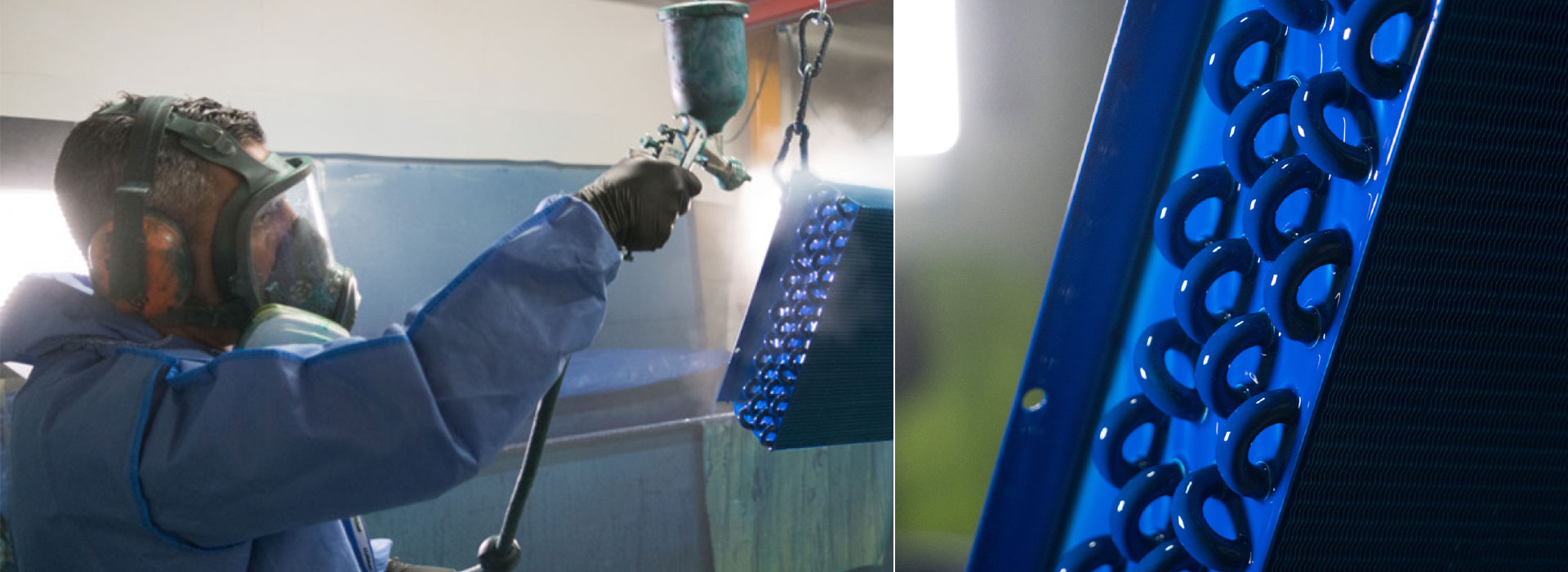
Following ECRA-DTM procedures using COILDEFDNER cleaners to prepare the coil surface. Spray using compressed air and HVLP spray gun or airless spray gun. ECRA-DTM needs to be mixed well before application. Brush and roll applications are not recommended.
STORAGE
Store in original contained out of direct sunlight and in areas less than 30 C. Shelf life plus 5 years when stored in unopened original contained. Once opened and partially used contents have shelf life of 12 months.
TECHNICAL DATA
DRYING TIME
- Room temp and relative humidity less than 80 %
- Touch dry 5 minutes
- Handle in 1 hr
- Recoat 10 minutes
- Full cure 24 hrs
CLEANING PROCEDURE
The coil being coated with ECRA-DTM needs to be prepared well using the COILDEFENDER cleaning products and procedure. Make sure the coil can be reached so it can be properly cleaned, dried and coated.
- Fully soak the coil with clean water.
- Using COILDEFENDER cleaners soak the coil and allow cleaner to dwell on coil for at least 5 minutes.
- Fully rinse off the cleaner from the coil and allow to dry.
- Apply TXR-ACTIVATE to the coil as per instructions. Rinse off well and dry coil.
- ECRA-DTM needs to be applied with 24 hours of using the TXR-ACTIVATE.
DRYING PROCESS
The coil must be dry before the application of ECRTA-DTM. Either turn the unit on to accelerate drying or using a power blower or compressed air.
SPRAY APPLICATION
Before the ECRA-DTM is applied the coil must be cleaned and dried using the COILDEFENDER cleaning procedures. The ECRA-DTM coating must be applied with at least three quality passes across the coil. This will allow the coating to contact the collar and any previously damaged heat exchange surfaces. A tight spray pattern at no more than 100mm from surface using either air assisted for an airless spray gun Three full passes should be used in both the horizontal and vertical directions.
EQUIPMENT CLEAN-UP
After the coating has been applied all equipment used can be cleaned using water and a small brush.

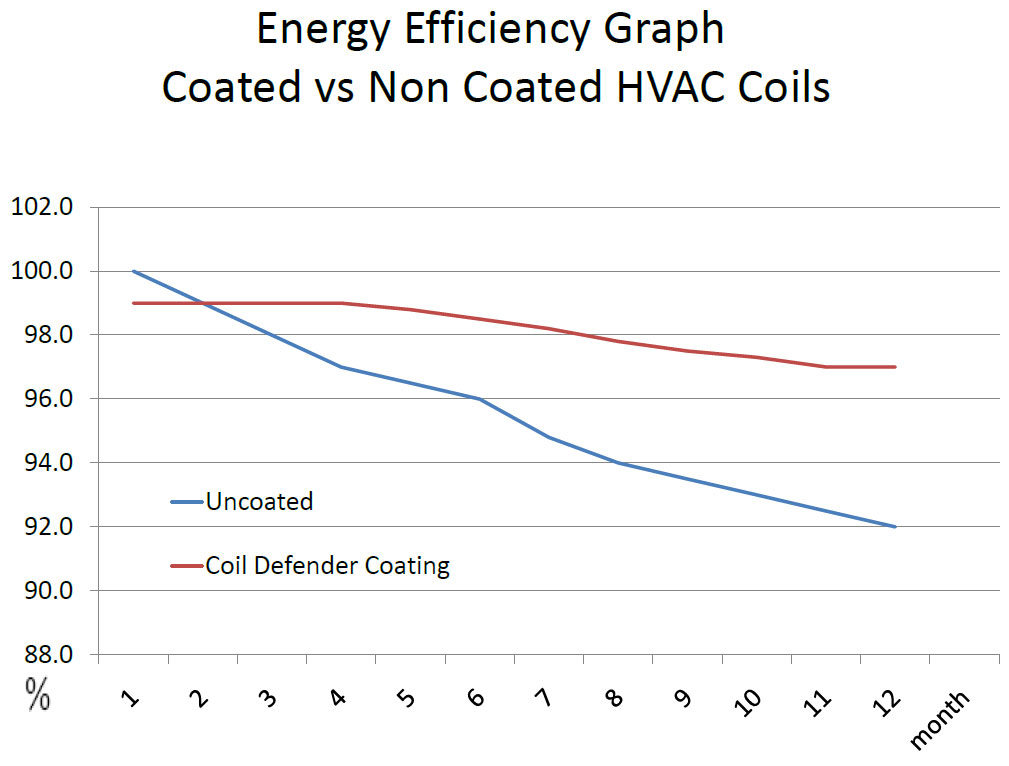
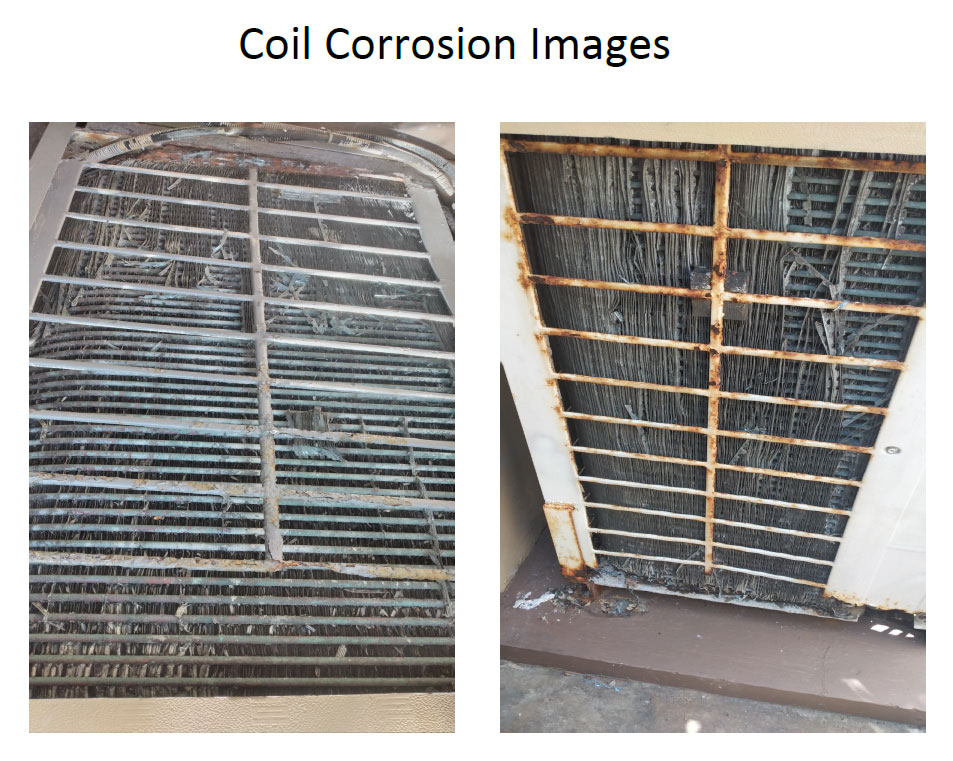
Effects Of Coil CorrossionOn HVAC Coils
- > 50% reduction in equipment life span
- 35% increase in power consumed
- 30% increase in current load
- 25-30% loss in cooling capacity
- More flash gas at the metering device
- Lower net refrigerant effect in the evaporator
- High sub-cooled liquid temperatures
- High discharge temperature causing a higher compression ratio
- Compressor discharge temperature above 225?F will result in compressor failure
- Poor sub-cooling of saturated vapor to liquid phase